Dark season 2: War on God (Spoilers)
Now that the second season of Dark, Netflix´s German series, has been out for a month, writing about it should not be much of a spoiler, should it?
Dark´s first season came quite low profile, I mean, a small show, no media hype, a German show with a German cast, none of them well known outside Germany.
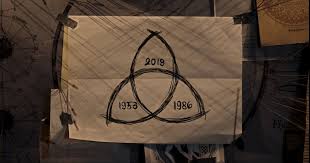
The show main theme is pretty old, I mean, in movies and literature: time travel. Ranging Kurt Vonnegut´s Slaughterhouse 5 convoluted plot (for the 144 characters generation), to the the funny Back to the Future, the tropes are all there: time lines, time machine, an option for dystopia that is not out of place in this end of decade...
The showrunners built a narrative in three seasons, or cycles. Three questions: when you are, where you are, what dimension or world you are.
It is an intriguing show for those who enjoy keeping track of who is related to whom, what is the timeline, etc. You can find dozens of videos on youtube reviewing these stuff, but that´s not what really appealed to me.
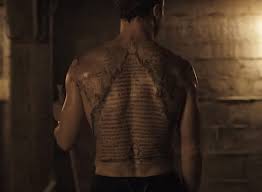
Sic mundus creatus est... is a line from the emerald tablet, writen by the mythic Hermes Trimegistus. I´ve read it, as well the Kybalion when I was a teenager, curious about all things esoteric. I thought it was funny, if not a bit pretentious, to use that quotation. The science in the show is very lame, and that is alright, I don´t care, it is there only for the sake of story telling, but I had a feeling that the quotation, pretentious as it was, was more important.
As above so below, and all things are connected, so you can read into the mind of the creator by reading the things natural. Science is one of the languages God used in order to build this world, the hermetic principles, as a pathway to a better life.

The verse from the emerald tablet reads:
Do the showrunners consider the dark matter, or God particle, to be this force above all force? This force, which is made truly a matter in the show is nothing but Time itself.
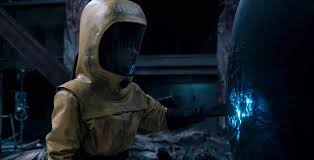
Time is truly a God isn´t it? Without time, there is no birth, since birth marks the beginning of existence, nor death, which is the end of existence, at least as substance or conscience. Time defines orientation, that is aging, from birth to death, and sets an order and makes sense of our experiences. It is amazing that I can contemplate death as a fact of being human, but I can not contemplate the absence of time. I grieve the loss of youth, for instance, I can feel my body aging and decaying, and I understand this process as an effect of time, that is alright, yet the absence of time is harder to grasp than death. The word "forever" would be meaningless in a reality where time was meaningless.
When Adam/Jonas sets upon himself to defeat Time, calling it the one true God, I immediately agreed with him, and wondered... part of me would love to join this fight, simply because I would not know the outcome of such endeavor. Would I be crushed, deformed after every attempt, as he was? Would I see the world go to ashes and people die? Would I eventually succeed? If I succeeded, would I know it? Suppose I had no child, I would have nothing holding me back.
The reasoning is simple, if we cease to exist, as time is broken, then our conscience, past, present, and, of course, dreams of future, are erased, and I would be causing no harm, cause there would be no memory of it whatsoever. We´d be new, on a completely new dimension, and all that defines our existance now, is moot. Failed attempts, however, are painful. Time is memory, good and bad. Time leaves scars...

Dark´s first season came quite low profile, I mean, a small show, no media hype, a German show with a German cast, none of them well known outside Germany.
The show main theme is pretty old, I mean, in movies and literature: time travel. Ranging Kurt Vonnegut´s Slaughterhouse 5 convoluted plot (for the 144 characters generation), to the the funny Back to the Future, the tropes are all there: time lines, time machine, an option for dystopia that is not out of place in this end of decade...
The showrunners built a narrative in three seasons, or cycles. Three questions: when you are, where you are, what dimension or world you are.
It is an intriguing show for those who enjoy keeping track of who is related to whom, what is the timeline, etc. You can find dozens of videos on youtube reviewing these stuff, but that´s not what really appealed to me.
Sic mundus creatus est... is a line from the emerald tablet, writen by the mythic Hermes Trimegistus. I´ve read it, as well the Kybalion when I was a teenager, curious about all things esoteric. I thought it was funny, if not a bit pretentious, to use that quotation. The science in the show is very lame, and that is alright, I don´t care, it is there only for the sake of story telling, but I had a feeling that the quotation, pretentious as it was, was more important.
As above so below, and all things are connected, so you can read into the mind of the creator by reading the things natural. Science is one of the languages God used in order to build this world, the hermetic principles, as a pathway to a better life.
The verse from the emerald tablet reads:
Its force is above all force. For it vanquishes every subtle thing and penetrates every solid thing.So was ye world created.From this are and do come admirable adaptations where of the means is here in this.
Do the showrunners consider the dark matter, or God particle, to be this force above all force? This force, which is made truly a matter in the show is nothing but Time itself.
Time is truly a God isn´t it? Without time, there is no birth, since birth marks the beginning of existence, nor death, which is the end of existence, at least as substance or conscience. Time defines orientation, that is aging, from birth to death, and sets an order and makes sense of our experiences. It is amazing that I can contemplate death as a fact of being human, but I can not contemplate the absence of time. I grieve the loss of youth, for instance, I can feel my body aging and decaying, and I understand this process as an effect of time, that is alright, yet the absence of time is harder to grasp than death. The word "forever" would be meaningless in a reality where time was meaningless.
When Adam/Jonas sets upon himself to defeat Time, calling it the one true God, I immediately agreed with him, and wondered... part of me would love to join this fight, simply because I would not know the outcome of such endeavor. Would I be crushed, deformed after every attempt, as he was? Would I see the world go to ashes and people die? Would I eventually succeed? If I succeeded, would I know it? Suppose I had no child, I would have nothing holding me back.
The reasoning is simple, if we cease to exist, as time is broken, then our conscience, past, present, and, of course, dreams of future, are erased, and I would be causing no harm, cause there would be no memory of it whatsoever. We´d be new, on a completely new dimension, and all that defines our existance now, is moot. Failed attempts, however, are painful. Time is memory, good and bad. Time leaves scars...
It is unfair to compare Dark to blockbuster shows, such as Stranger Things. The latter is fast paced, geeky, and is geared towards kiddults, adults who have never really grew old, are still kids inside, never facing their anguish and internal conflicts, solving or living with them in a way that embraces the sadness: they are kids, or teens, fighting monsters. Dark does not have monsters, or an antagonist, it is only us, our collective agony, life and living, suffering, understanding how fatal life is and trying to do something about it, not because a character is brave, or because one is seeking glory, there is an overwhelming sense of doom.
Perhaps I´d join this crusade against Time because, as said William Faulkner "Time is never dead. It´s not even past". That kind of haunts me, my scars...

Comentários
Postar um comentário